Retail and strip centers
Understand how shared parking serves your retail center.
Storefront visits, order pickup, deliveries, staff and seasonal overflow all share one outdoor lot. ParkSense helps property teams see how each area is used through the week, so lot decisions start from observations instead of anecdotes.
Sample week · zone useMon–Sat
- StorefrontBusy 11:30–13:30
- Pickup baysFri evening
- OverflowSat from 12:40
- LoadingSat gap
Direct answer
What does ParkSense do for a retail property team?
ParkSense gives a shopping-center or strip-center property team a shared, time-stamped view of how each part of the outdoor lot is used. Zones are named by purpose, such as storefront short stay, pickup, loading, staff and overflow, so the weekly review can ask whether each area is doing its job. Gaps in observation are shown as gaps, never as empty spaces.
For operators of paid lots, the paid surface lot page covers shift decisions alongside payment and permit records.
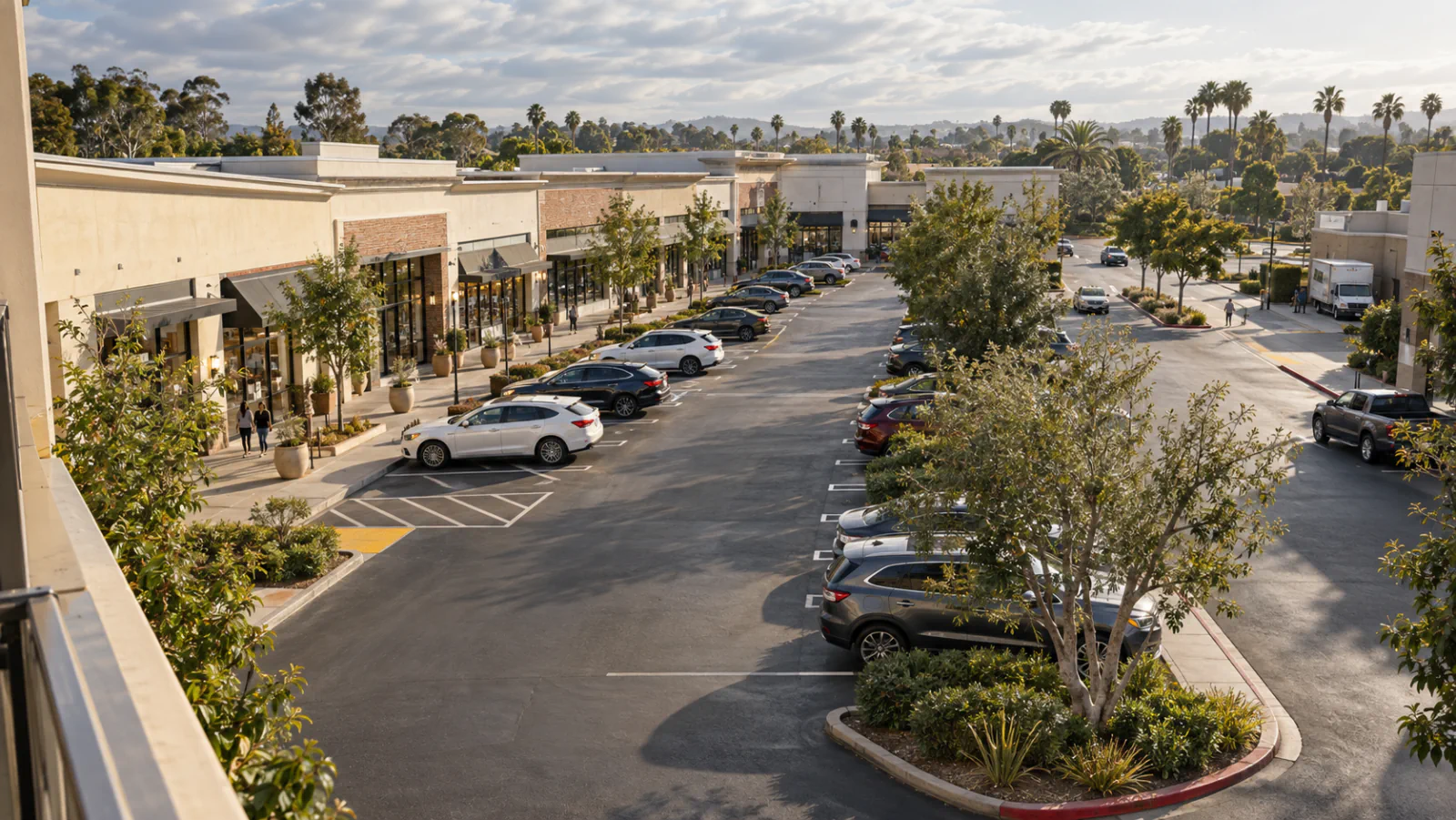
Zone-purpose map
Name each area by the job it does.
A fictional strip center with five purposes. The map is schematic; your zones follow your lot.
Zone-purpose worksheet
Agree what each zone is for.
Fill this in before the site walk. Each row becomes a named zone, a question for the weekly review and an owner who follows up.
| Zone | Intended use | Property-team question | Observation that helps | Owner | Review |
|---|---|---|---|---|---|
| Storefront short stay | Quick visits close to the shop doors. | Are the closest rows turning over, or held by long stays at peak? | Occupancy by row with observation times through the day. | Property manager | Weekly review |
| Pickup bays | Order pickup and curbside handoff for tenants that offer it. | Are pickup bays free when tenants need them? | Bay occupancy and how long bays stayed occupied, by time of day. | Property manager with tenant contacts | Weekly review |
| Loading zone | Deliveries at the rear service lane. | Is the loading zone clear during delivery windows? | Observed occupancy during agreed delivery hours. | Facilities lead | Daily during deliveries |
| Staff parking | Tenant employees, away from storefront rows. | Are staff rows used as intended, leaving storefront rows for visitors? | Early-morning and shift-change occupancy in staff rows. | Property manager | Monthly review |
| Overflow | Seasonal and event peaks at the far end of the lot. | When does overflow start to fill, and is signage sending drivers there? | Overflow occupancy on busy days, with freshness for every reading. | Facilities lead | Seasonal review |
Weekly property-team review
A week of observations, one short agenda.
A synthetic example of the review a property manager and facilities lead could read on Monday morning.
| Zone | What was observed | Observation gap | Owner | Next review action |
|---|---|---|---|---|
| Storefront short stay | Rows nearest the café were observed full from 11:30 to 13:30 on four of six days. | None | Property manager | Ask the café and pharmacy whether staff are parking in the front rows. |
| Pickup bays | Both bays were occupied for long stretches on Friday evening. | None | Property manager | Review bay signage with the tenant that runs pickup orders. |
| Loading zone | Clear during the 06:00–09:00 delivery window on weekdays. | No observations Saturday 14:10–17:40: the camera view was blocked. | Facilities lead | Clear the obstruction; treat Saturday afternoon as unknown, not empty. |
| Overflow | First use on Saturday from 12:40; unused on weekdays. | None | Facilities lead | Keep the overflow sign covered on weekdays; revisit before the holiday season. |
Synthetic example for illustration. The loading-zone gap stays unknown in the review; it is never counted as an empty zone.
Visit patterns
Questions observations can inform.
Where coverage supports them, observations over weeks show how the lot is used. They answer lot questions; other records answer the rest.
Lot questions
- Which rows fill first, and at what times of day?
- Do pickup and loading areas stay available when tenants need them?
- When does overflow start to matter, and on which days?
- Are staff rows doing their job of keeping storefront rows open for visitors?
- Where are camera views stale often enough to need a coverage change?
Answered by other records
- Tenant sales and visitor counts inside stores.
- Who an individual driver or shopper is.
- Paid sessions, validations or parking entitlement, which stay in the payment and permit systems you already use.
Site walk
Coverage checklist and agreed outputs.
- 01Zone boundaries. Walk each zone in the worksheet and agree its edges and name.
- 02Sightlines. Note trees, signs, trucks and building corners that could block a view.
- 03Mounting points. Light poles and building edges with power nearby.
- 04Delivery and pickup windows. Hours when loading and pickup areas matter most.
- 05Lighting. Evening conditions in each zone during trading hours.
- 06Review owners. Who reads the weekly review and who follows up with tenants.
Agreed during setup
- A named zone map that matches the worksheet.
- Coverage for each zone, with any area left out stated plainly.
- Freshness rules: how old an observation can be before a zone shows as awaiting observation.
- A weekly review layout and the people who receive it.
Retail center site discussion
See how your lot serves your tenants.
Tell us about your center, its zones and the questions your property team asks. We will reply by email with how a site walk and coverage plan could work.